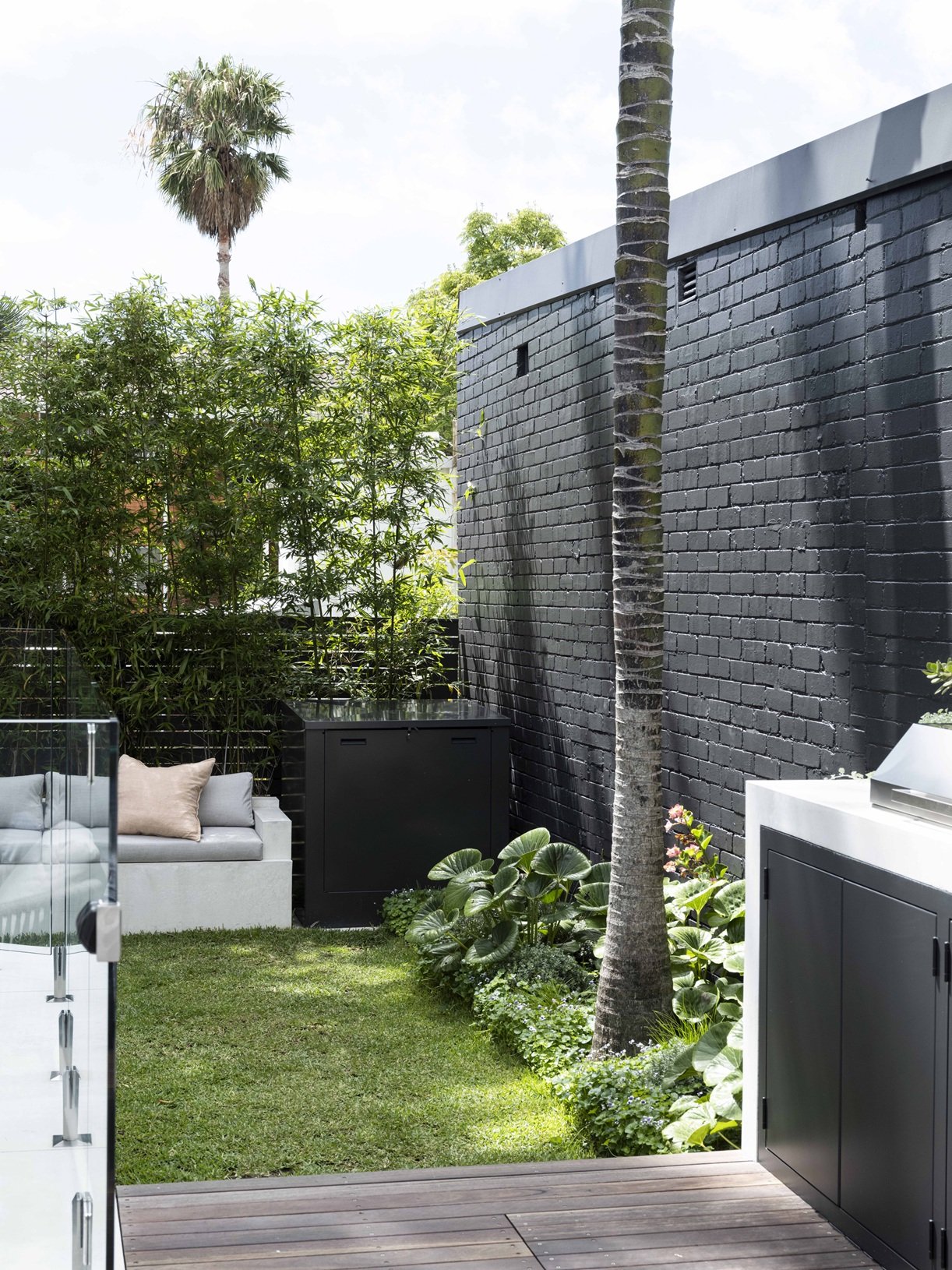
Poolside Planting and Hardscape for Sydney Microclimates: Salt, Wind, Shade
Designing Poolside Landscapes That Endure Sydney’s Climate
Pool landscaping in Sydney is about far more than pouring a concrete shell and picking a few token plants at the end. You are creating an outdoor room that has to cope with salt in the air, gusty winds, shade patterns and harsh sun, and it needs to keep performing for decades. When these factors are ignored, gardens struggle, paving moves and pool areas start looking tired long before they should.
We treat the pool, planting, hardscape, lighting, drainage and irrigation as one integrated design. Pool coping, step layouts, feature walls, planters, soil depths and plant species are all planned together from the first sketch. That way the space works as a whole, both technically and visually, instead of feeling like a pool with some add-ons.
In this article, we will walk through how we read your site conditions, how we design planting for salt, wind and shade, how we set up soil profiles and drainage, how we zone irrigation, and how long-term maintenance planning keeps everything looking sharp with realistic effort.
Reading Your Backyard: Salt, Wind, Shade and Aspect
Two backyards in the same suburb can feel completely different once you factor in salt, wind and shade. Coastal homes often get fine salt carried in on sea breezes, which can scorch sensitive foliage and mark some surfaces. Harbour or ridge-top sites can be windy, drying out plants and stressing weaker species. Urban blocks might be protected from wind but sit in heavy shade from neighbouring houses or tall trees.
When we assess a site, we look at how the sun and wind move through the space during the year and how that will affect the pool and garden:
- Mapping summer and winter sun paths and where shadows fall
- Identifying wind corridors, sheltered pockets and turbulence around buildings
- Noting overhanging eaves, neighbouring trees and existing structures
- Reviewing access, privacy lines and key outlooks from inside the home
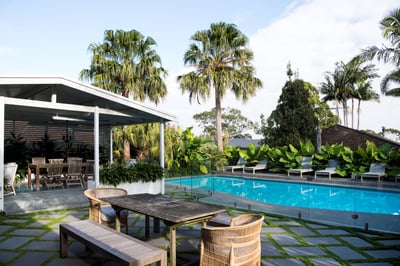
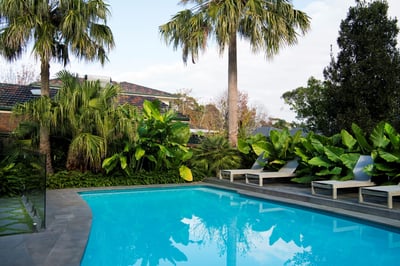
A coastal pool near Sydney’s eastern beaches might be pushed slightly inboard from the boundary, wrapped by a planting scheme that filters salt and wind, with hardwearing stone paving and salt-tolerant species. A sheltered North Shore courtyard, on the other hand, may suit a lighter colour palette, feature planting that performs in dappled light and careful layout to encourage airflow so the area never feels damp or gloomy. Every decision flows from that early site reading.
Planting Palettes for Salt, Wind and Shade Resilience
Smart species selection is one of the best ways to keep maintenance reasonable and your pool area looking composed. The right plants will cope with the microclimate, keep their shape and avoid constant mess in the water.
For coastal and salt-affected zones, we focus on:
- Salt-tolerant, architectural species with clean lines
- Plants with non-invasive root systems suited to tight planting pockets
- Low-litter foliage that will not constantly drop leaves or fruit into the pool
On wind-exposed ridgelines or open sites, we often layer planting to slow and filter wind instead of trying to block it with a single solid hedge. This might include:
- Tough groundcovers that bind soil and reduce erosion
- Flexible shrubs that sway without snapping or burning
- Taller feature plants that hold form without excessive defoliation
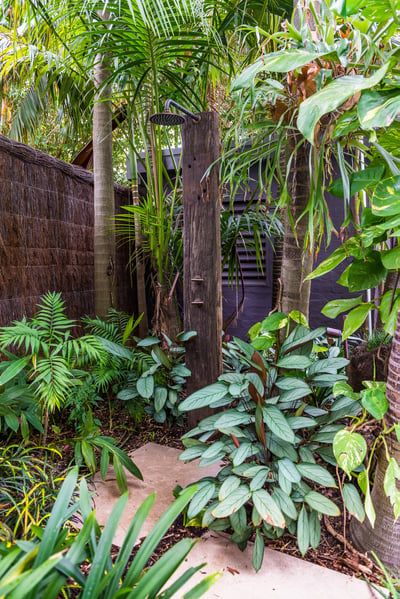
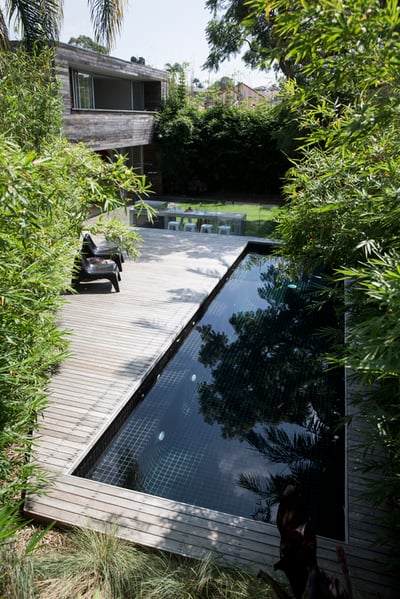
In shaded or dappled light courtyards, structure and colour are the focus. Here we lean into species that stay lush with limited sun and use light-coloured hardscape or feature walls to bounce light into deeper planters. The result is a green, calm space that still feels bright and inviting.
Near pools, plant behaviour matters just as much as the look. We avoid:
- Heavy leaf shedders that fill skimmers and clog filters
- Plants with spines or sharp edges close to walkways and steps
- Invasive roots close to the pool shell or services
- Berries or sap that can stain stone and pool finishes
Our planting layouts balance groundcovers, shrubs, feature plants and small trees to frame the water, create privacy where needed and hold interest through the year. The aim is a garden that reads as lush and refined without needing constant correction.
Hardscape, Soil Profiles and Drainage Around the Pool
A premium concrete pool only performs as well as the ground and hard surfaces around it. Poor subgrade preparation, incorrect falls or weak drainage can lead to movement, water damage, efflorescence and staining that spoil the finish.
After pool construction, the surrounding soil is often a mix of builder’s fill and compacted ground. For planting zones adjacent to the pool, we pay close attention to soil profiles:
- Stripping out unsuitable fill where required
- Deep conditioning or replacing soil so roots can establish properly
- Creating different profiles for lawn, garden beds and feature trees
- Installing root barriers where planting sits near the pool shell or retaining walls
Hardscape material choice is just as important. Around pools we look for quality stone, concrete or decking that is:
- Slip-resistant when wet
- Durable in salt and sun
- Selected to avoid excessive glare in peak summer light
Correct sub-base preparation, expansion joints and drainage channels are non-negotiable. Water must have a clear path away from the pool and adjacent structures so surfaces stay stable and clean. On our projects, coping heights, step riser dimensions, feature walls, in-built planters and paving levels are all coordinated before construction starts so water flow, soil depths and planting pockets are resolved on paper, not during install.
Intelligent Irrigation Zoning and Efficient Water Use
A single, blanket irrigation line is rarely suitable for a detailed pool garden. Plants near hot stone, raised planters and sheltered beds all have different needs. If every zone is treated the same, some areas will be overwatered and others will struggle.
We design irrigation around how each part of the garden behaves:
- Separate lines for lawn, deep-rooted trees and shrubs, and shallow borders
- Dripline in garden beds near the pool to minimise overspray onto water and stone
- Micro-sprays or specific emitters where a light overhead touch is better for foliage
Sun-exposed beds and windy corners dry out faster and may need shorter, more frequent run times. Shaded or protected beds usually need less water overall. Coastal wind can strip moisture quickly from elevated planters, so these often get their own zone and programming.
Smart controllers with Wi-Fi, seasonal adjustment, rain sensors and flow monitoring make it easier to protect a mature garden through hot spells while keeping hard surfaces and water features clean. When the irrigation design is considered from the outset, the result is a pool area that stays healthy and efficient without daily manual tuning.
Planning Maintenance From Day One for Long-Term Impact
Maintenance should be part of the design brief from the first conversation. We talk with clients about how much time they want to spend in the garden, how lush they prefer the planting to feel and the character they want the space to develop over five to ten years. This guides species choice, garden density and the level of automation built into irrigation and lighting.
A typical long-term care plan for a premium pool and garden includes:
- Seasonal mulching before peak heat to protect soil moisture
- Pruning for structure rather than constant clipping, so plants age gracefully
- Fertilising on a set schedule to keep growth steady, not explosive
- Regular irrigation checks and adjustments as trees mature and shade patterns change
Surface care is also key. Stone, concrete and timber need cleaning and periodic sealing to manage salt, chlorine, sun and organic staining. Thoughtful detailing at design stage, such as drip edges, falls and material transitions, reduces long-term marking and makes cleaning easier.
Gardens are living systems, so periodic replanting or editing is normal. As feature plants fill out and the space softens, we may thin, underplant or adjust certain areas to keep the composition balanced and views open to the pool. Investing in quality construction, soil, plants and systems at the start leads to fewer failures, less reactive spending and an outdoor area that keeps matching the architecture long after the first summer.
Get Started With Your Project Today
If you are ready to transform your backyard into a relaxing retreat, our team at Custom Creations Landscapes is here to help. Explore our tailored pool landscaping solutions and see how we can create an outdoor space that suits your lifestyle and home. Tell us about your project goals and budget, and we will guide you through the next steps. To book a consultation or ask any questions, simply contact us.